

Cancer-associated nerve injury leads to chronic inflammation and immunotherapy resistance

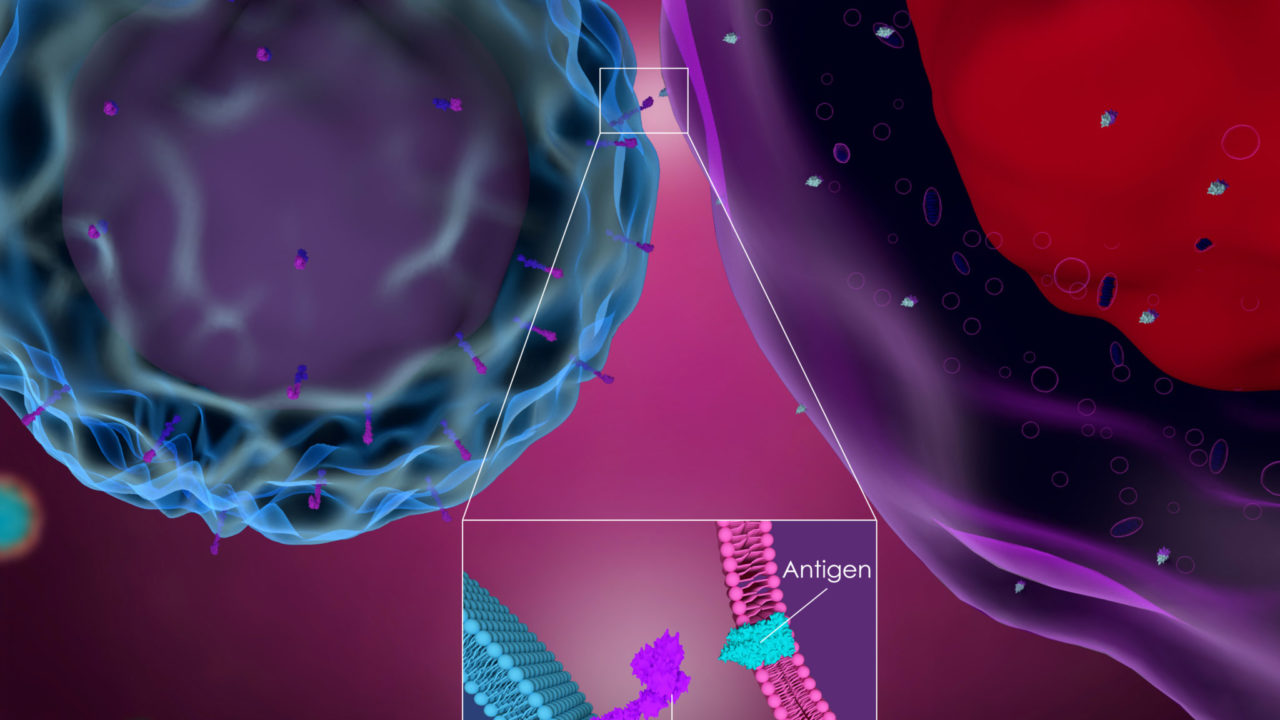
Cancer cells can break down the protective covers around nerves, causing nerve injury that triggers chronic inflammation leading to immune exhaustion and eventual resistance to immunotherapy, according to new research from The University of Texas MD Anderson Cancer Center.   The study underscores the importance of investigating interactions between cancer and the nervous system – a field known as cancer neuroscience. The results suggest that targeting the signaling pathways involved can reverse this inflammation and improve treatment responses....

Final trial data from ELI-002 cancer immunotherapy vaccine reinforce promising results

In initial results from the AMPLIFY-201 trial, co-led by Shubham Pant, M.D., an immunotherapy vaccine targeting the lymph nodes showed potential in delaying relapse of KRAS-mutated pancreatic and colorectal cancers for patients who had previously undergone surgery. Long-term final follow-up data of this vaccine, ELI-002 2P, now shows that 17 of 25 patients (68%) had robust T cell responses, which were associated with increased survival. At 24 months, the median recurrence-free survival had not yet been reached for the higher response group – including all of...

Triple combination therapy shows promise for treatment-resistant microsatellite stable BRAF V600E-mutant metastatic colorectal cancer

The BRAF V600E gene mutation makes colorectal cancers (CRCs) more aggressive, leading to poorer survival rates. While some CRCs with high microsatellite instability respond well to immunotherapy, most BRAF V600E-mutant metastatic CRCs are microsatellite stable (MSS) and do not benefit from these treatments. The combination of encorafenib and cetuximab is Food and Drug Administration (FDA)-approved but has limited duration of response in these patients, which led Van Morris, M.D., and colleagues at MD Anderson to examine the safety and efficacy of adding the anti-PD-1...

Novel sequencing technology links DNA and RNA to provide molecular insights into breast cancer progression

Breast cancer often starts in the epithelial cells lining the milk ducts and lobules, but there are many subtypes that make it challenging to identify the cancer’s starting point within normal tissue. Researchers led by Nicholas Navin, Ph.D., developed a new single-cell DNA and RNA sequencing technology – called wellDR-seq – to identify ancestral breast cancer cells. By studying the impact of chromosome gains or losses on gene expression, the researchers were able to uncover the molecular...

Large-scale CRISPR screening in stomach organoids reveals gene-drug interactions

Scientists often use organoids – laboratory-grown human cell culture systems that closely mimic body organs – to gain deeper insights into cancer biology and understand how tumors respond to drugs. Researchers led by Yuan-Hung Lo, Ph.D., used organoids along with several CRISPR gene editing tools to study how cisplatin chemotherapy interacts with different genes in the human stomach. The screens revealed an unexpected link between cisplatin sensitivity and fucosylation, a process that adds sugar molecules to cells. The researchers identified the TAF6L gene as a key regulator...

First-in-class pan-KRAS inhibitor shows strong antitumor activity in preclinical models

KRAS is the most commonly mutated gene in cancer, but targeting the mutant protein is notoriously difficult because current therapies work only for certain KRAS mutations. This led researchers Kathleen McAndrews, Ph.D., Anirban Maitra, M.B.B.S., Raghu Kalluri, M.D., Ph.D., and Timothy Heffernan, Ph.D., to examine the efficacy of a first-in-class inhibitor called BI-2493. This pan-KRAS inhibitor can target the mutant protein in multiple cancer types, regardless of the specific mutation present. BI-2493 was developed as part of the...

Harris Health Moves Forward Proposal to Acquire Park Land for Expansion of Ben Taub Hospital

The Harris Health Board of Trustees unanimously adopted a resolution calling for the acquisition of land to support the critically needed expansion of Harris Health Ben Taub Hospital.   Ben Taub Hospital has been consistently operating at and beyond its 402-bed capacity, and the need for its healthcare services is expected to grow at a rapid pace in the coming months. With cuts to federal Medicaid funding and insurance subsidies for lower-income individuals who purchase...

Novel tool helps identify key targets to strengthen CAR NK cell therapies

Natural killer (NK) cells became markedly better at killing cancer cells after scientists removed key gene targets identified through a new genome-wide CRISPR screening tool.   The study opens new avenues for discovering approaches to enhance the antitumor activity of chimeric antigen receptor (CAR) NK cell therapies against multiple cancer types via PreCiSE, a comprehensive CRISPR discovery platform optimized for primary human NK cells.   “Targeted gene editing is a powerful tool to enhance the...

UTMB announces key leadership appointments in the John Sealy School of Medicine

The University of Texas Medical Branch (UTMB) has announced two significant leadership appointments in the John Sealy School of Medicine (JSSOM), reinforcing the institution’s commitment to clinical excellence, medical education, and research innovation.   Dr. Antonio Bianco, MD, PhD, has been named Senior Vice President of Health Affairs and Dean of the John Sealy School of Medicine, while continuing in his role as Chief Research Officer. Bianco, who has served as interim dean since March,...

Global UNVEIL initiative launches to fast track lassa fever vaccine development

Scientists at the University of Texas Medical Branch’s Galveston National Laboratory have been awarded up to $6.4 million in funding to support an international research consortium to crack one of the toughest problems in infectious disease science: determining which immune responses protect people against Lassa fever.   This funding was awarded as part of a joint funding call by the Coalition for Epidemic Preparedness Innovations (CEPI) and Wellcome, with CEPI providing the funding to UNVEIL, which...

MJH footer logo with red letters

Medical Journal – Houston is the leading source of healthcare business news. With extremely relevant content, late-breaking news and monthly exclusives from industry experts, MJH News has created a winning combination of must-read editorial that physicians and hospital executives eagerly anticipate month after month. MJH News is the resource that provides everything they need in one place, and it is a high honor that they rely upon Medical Journal – Houston to keep their practice or hospital on the cutting edge.

Archives