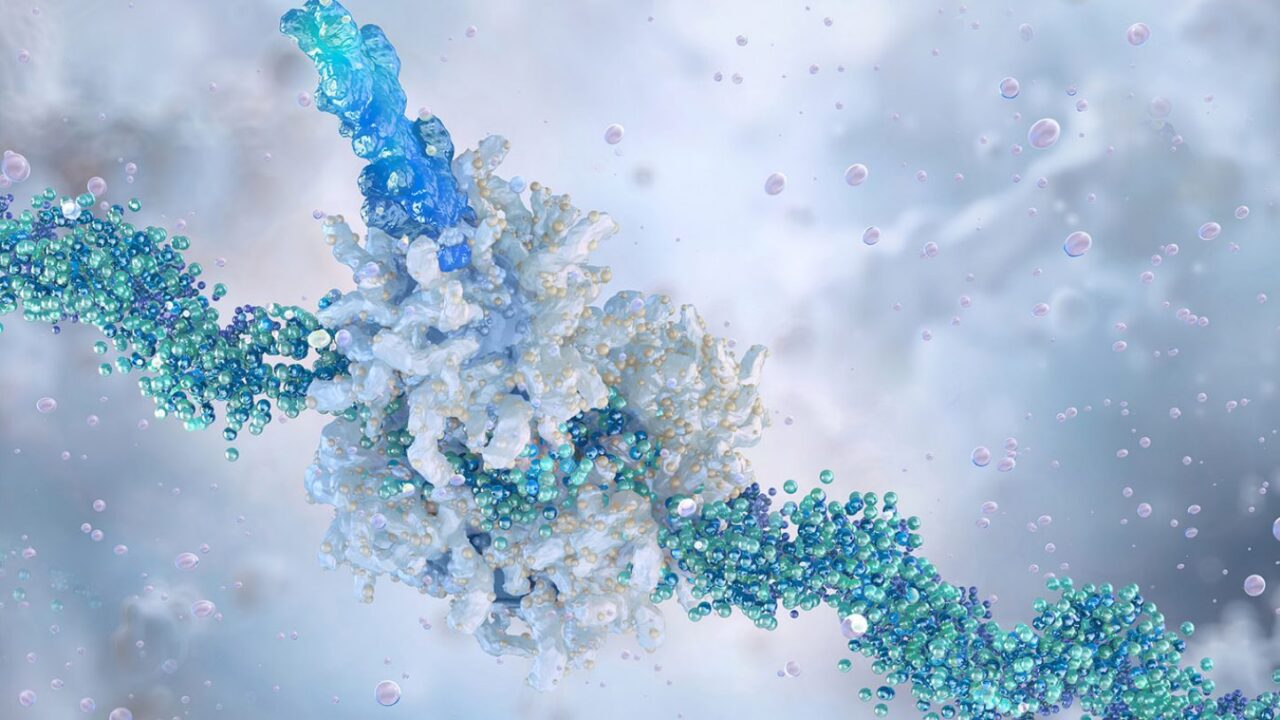


Immune cell dysfunction, not absence, defines skin cancer in immunosuppressed patients

Researchers discovered that immunosuppressed patients with non-melanoma skin cancer are not missing the key cancer-fighting immune cells found in immunocompetent patients, but those cells – known as macrophages – have lost the ability to communicate effectively. This new understanding may help researchers develop new treatment approaches for these aggressive skin cancers. The study was co-led by Moran Amit, M.D., Ph.D., assistant professor of Head and Neck Surgery; Kunal Rai, Ph.D., professor of Genomic Medicine; Frederico Gleber-Netto, D.D.S., Ph.D., assistant professor of Head...
Donor cord blood composition may influence CAR NK cell therapy outcomes

The composition of donor cord blood may play a critical role in the success of chimeric antigen receptor (CAR) natural killer (NK) cell therapies. A small population of immature NK cells present in donor cord blood can undermine the activity of CAR NK cell therapy by redirecting potent immune cells away from tumors and causing them to attack one another. The study, led by first and co-corresponding author Ye Ethan Li, M.D., Ph.D., identifies a previously...

Biomarkers may help identify lung cancer patients who benefit most from perioperative immunotherapy

Biomarkers including circulating tumor DNA (ctDNA) clearance and molecular residual disease (MRD) status may help identify which patients with resectable non-small cell lung cancer (NSCLC) get the greatest benefit from immunotherapy given before and after surgery (perioperative). The study analyzed biomarkers and clinical outcome data from the Phase 3 CheckMate 77T trial, which previously demonstrated improved outcomes with perioperative immunotherapy. The researchers found that the best indicators of a positive outcome were ctDNA clearance before surgery and achieving a pathologic...

University of Houston Awarded $4 Million NIH Grant to Study Autoimmune Disease

With a $4M grant from the National Institutes of Health, a University of Houston pioneer in autoimmune research, Chandra Mohan, is launching a 10-year study set to target the very heart of autoimmune disease – examining what causes the body to attack itself and identifying biological pathways that could become targets for new treatments.   The debilitating array of Systemic Autoimmune Rheumatic Diseases (SARD) includes Rheumatoid Arthritis, Systemic Lupus Erythematosus, Sjogren’s Syndrome and Systemic Sclerosis....

Experimental cell therapy delivers encouraging results for patients with rare, potentially fatal brain infection

In the largest study of its kind, a virus-specific T cell therapy achieved a response in more than half of treated patients with a rare and often deadly neurological condition caused by viral infection, according to Phase 2 study results. The investigational, off-the-shelf virus-specific T cells achieved an overall response rate of 56.8% in 37 patients with progressive multifocal leukoencephalopathy (PML), including 43.2% achieving complete viral clearance with stabilization or improvement of neurological symptoms. Patients...

Novel CAR T cell therapy offers promising option for hard-to-treat kidney cancer

Patients with advanced clear cell renal cell carcinoma (ccRCC) who were treated with the CD70-targeted allogenic chimeric antigen receptor (CAR) T cell therapy, ALLO-316, experienced encouraging results with durable responses, according to results of the Phase 1a/b TRAVERSE clinical trial. This first-in-human study evaluated ALLO-316 in patients with metastatic ccRCC who had progression after treatment with immune checkpoint inhibitors and tyrosine kinase inhibitors. The Phase 1a portion of the study established the recommended dose and lymphodepletion...

Hidden metastases reveal clues to colorectal cancer recurrence

Researchers identified a six-gene signature in microscopic colorectal cancer (CRC) liver metastases that may help predict recurrence after treatment. These tiny, often undetectable tumor deposits could serve as a tissue-based marker of residual cancer cells, recurrence risk and chemotherapy resistance. The comprehensive spatial analyses of CRC metastases used advanced genomic technologies to uncover insights into how micrometastases evolve, evade the immune system and persist after treatment. The study was co-led by Dipen Maru, M.D., professor of Anatomical Pathology; Scott Kopetz, M.D., Ph.D.,...

KRAS-targeting drugs show promise for rare appendix cancer

A new study demonstrated that targeting mutant KRAS may offer a promising new treatment option for appendix cancer. Researchers led by John Paul Shen, M.D., assistant professor, Saikat Chowdhury, Ph.D., instructor, and Ichiaki Ito, Ph.D., research scientist, all of Gastrointestinal Medical Oncology, demonstrated that KRAS inhibitors significantly reduced tumor growth, blocked key cancer signaling pathways and triggered cancer cell death in advanced preclinical models of appendiceal adenocarcinoma. In a clinical cohort of 15 patients treated with a variety...

Immune ecotypes may explain multiple myeloma outcomes missed by disease staging

Researchers created a comprehensive single-cell map of the tumor immune microenvironment in multiple myeloma and its precursor conditions, providing new insights that may explain why patients with similar diagnoses often have differences in disease progression, treatment response, and outcomes. The study was co-led by Robert Orlowski, M.D., Ph.D., professor of Lymphoma/Myeloma and Experimental Therapeutics; and Linghua Wang, M.D., Ph.D., professor of Genomic Medicine, executive director and head of the Center for Cellular Language Intelligence, associate...

UT MD Anderson joins global consortium committed to eliminating cervical cancer

The University of Texas MD Anderson Cancer Center today announced it has joined a global consortium dedicated to accelerating the elimination of cervical cancer worldwide. The collaboration agreement with the Elimination Partnership in Cervical Cancer (EPICC) expands UT MD Anderson’s global oncology efforts, further strengthening its commitment to advancing cancer prevention and control in medically underserved regions. The EPICC program, led by the University of Sydney in collaboration with a consortium of local and global...

MJH footer logo with red letters

Medical Journal – Houston is the leading source of healthcare business news. With extremely relevant content, late-breaking news and monthly exclusives from industry experts, MJH News has created a winning combination of must-read editorial that physicians and hospital executives eagerly anticipate month after month. MJH News is the resource that provides everything they need in one place, and it is a high honor that they rely upon Medical Journal – Houston to keep their practice or hospital on the cutting edge.

Archives