

 BY Samuel Mathis MD
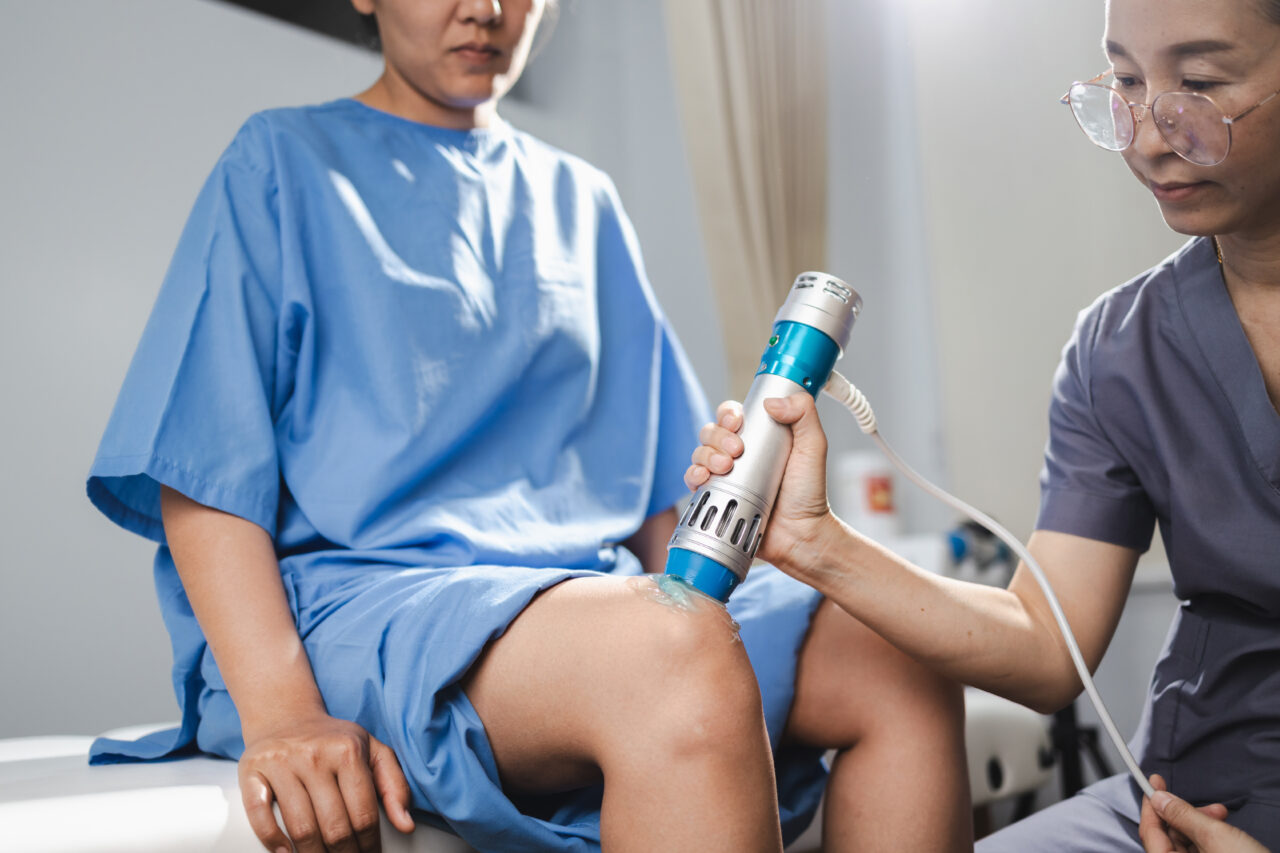
A therapeutic option that has recently caught my interest is the use of extracorporeal shockwave therapy (EWST). Extracorporeal shockwave therapy works by delivering high-energy acoustic pulses to the body. These pulses (or shockwaves) work to breakdown scar tissues and calcification, encourage growth of new blood vessels, promote production of collagen, and decrease inflammatory markers. This therapy has been available since 2020 and has recently experienced increased attention for its effects and applications.
Despite being around for over 25 years, we still do not fully understand the mechanism of action in how EWST works (1). We do know some of the biological effects of the treatment in its analgesic effect, tissue repair, and osteogenic effects. In terms of analgesia, EWST causes decrease in substance P, decreased expression of calcitonin-related peptide in the dorsal root, and activation of serotonergic system (1). Within the tissue repair, EWST increases proliferation of tenocytes, improved neovascularization, activation of collagen synthesis, and increased proliferation, activation, and differentiation of scar tissue keratinocytes (1). Finally, EWST improves osteoblast growth, stimulates periosteum, slows osteoclast activity, and regulates chondrogenesis through stem cell metabolism (1).
The primary utilization of EWST is in the treatment of injuries to tendons, bones, osteoarthritis, and other musculoskeletal issues. Musculoskeletal pathologies include some such as low back pain, joint tendinopathies, plantar fasciitis, carpal tunnel, calcific tendinopathies, fractures, and osteonecrosis (1, 2). Outside of musculoskeletal complaints, EWST has been used by urology for kidney stones (2). The studies examining EWST have shown good results in both systematic reviews and meta-analysis. However, there is significant variability in the techniques and variations of frequencies utilized (1). Therapy is traditionally provided in the area of concern with varying levels of intensity, frequency, and duration, though typical treatment is 3-10 sessions every 1-2 weeks. Some studies show that monotherapy seems to be more effective than when applied with other therapies (1).
Despite the positive findings with EWST, there are some adverse effects and contraindications. Contraindications for EWST include infections, pregnancy, and application to growth plates in minors (1). Additionally, caution should be utilized when treating areas that have any metallic components such as fixations, plates, screws, and medical devices (2). Because the waves travel at different speeds through different tissue densities, caution should also be used when treating areas around the lungs. Studies have found that shockwave therapy can cause damage to small pulmonary vessels within the lung tissue. Additionally, shockwave therapy is not recommended where there is suspected complete tear of the tendon due to the need for surgical approximation (1). Other contraindications include poorly controlled coagulopathies, pregnancy, active infection, and certain oncological conditions such as tumor metastasis, lymphoma, and multiple myeloma (1).
Despite the potential limitations and contraindications, extracorporeal shock wave therapy appears to be a safe and effective treatment for numerous musculoskeletal complaints. For physicians wanting to add this to their practice, the initial cost of the machine and materials may be prohibitive. However, Shockwave therapy is a billable treatment option utilizing approved CPT codes for the therapy. While not typically covered by insurance, a simple google search showed that many clinicians charge $100-500 per session with a full treatment course being 6-10 sessions. This service can provide a reasonable return on investment if utilized consistently. Shockwave therapy may have its place in sports medicine, orthopedics, and modern medicine once sufficient research has shown consistent benefit. I look forward to following the continued research on this therapy.
References:
- De la Corte-Rodríguez H, Román-Belmonte JM, Rodríguez-Damiani BA, Vázquez-Sasot A, Rodríguez-Merchán EC. Extracorporeal Shock Wave Therapy for the Treatment of Musculoskeletal Pain: A Narrative Review. Healthcare (Basel). 2023;11(21):2830. Published 2023 Oct 26. doi:10.3390/healthcare11212830
- Auersperg V, Trieb K. Extracorporeal shock wave therapy: an update. EFORT Open Rev. 2020;5(10):584-592. Published 2020 Oct 26. doi:10.1302/2058-5241.5.190067