


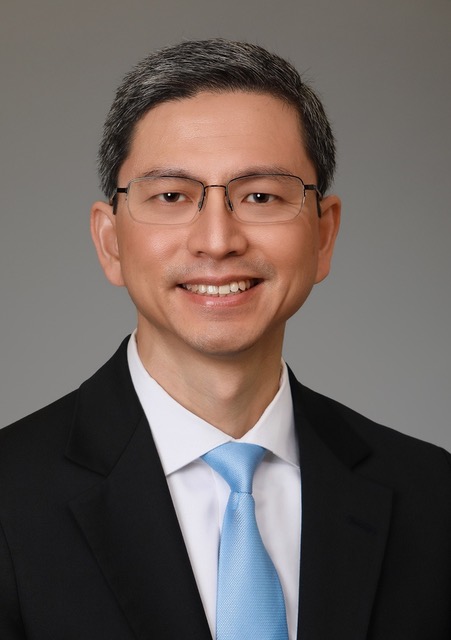
 BY Phuong D. Nguyen, Esq. and Michael R. Alexander, Esq., Brown & Fortunato, P.C.
In response to the recently adopted Doctor Act, the Texas Medical Board adopted new regulations designed to address physician shortages in Texas. The new Act and the new rules are aimed at providing new pathways to licensing foreign trained physicians and medical school graduates who do not match into a resident training program. Before digging into the statute and rules, it may be useful to briefly look at the underlying issue of physician shortages.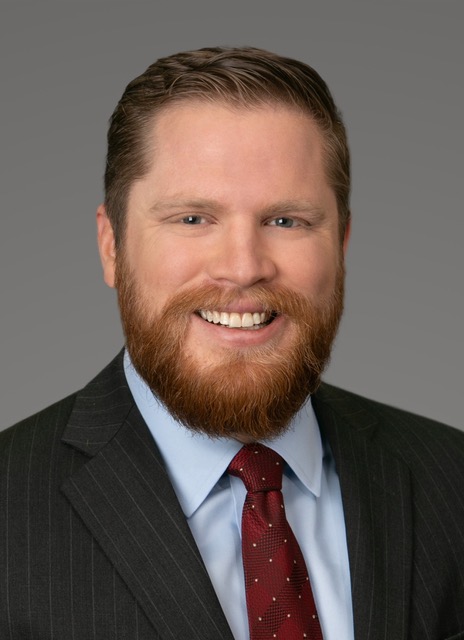
Physician Shortages in Texas.
The concern over physician shortages in Texas is not new. In 2015, the Texas legislature passed SB 18 to enhance graduate medical education in the state that included a provision requiring periodic research to identify medical specialties at critical shortage levels in the state, examine the overall supply of physicians in Texas, and identify issues relevant to the state’s ability to meet the current and future health care needs of the state.
In a recent report, the Physician Supply and Demand Projections 2021-2032, the Health Professions Resource Center at the Texas Department of State Health Services (“DSHS”) found that about half of Texas medical school graduates remained in Texas for their graduate medical education (GME) and almost 58.9% of physicians who complete their GME in Texas stayed in Texas to practice after residency. Despite this, Texas would, based on current models, have a shortage in all primary care specialties. The report also concluded that the shortage would increase through 2032 and that GME programs in the state would need to increase the number of residency slots each year to meet the shortfall.
In its most recent report, Texas Physician Supply and Demand Projections 2022-2036 Report, DSHS found that, although current shortage of all physicians in Texas should improve through 2036, the shortage of primary care is projected to increase between 2022 and 2036. The most recent data indicate 37% of unmet demand for primary care in 2022 and projects 42% unmet demand for primary care in the year 2036. Among primary care specialties, the statewide shortage of internal medicine, geriatrics, pediatrics, and psychiatry is projected to increase between 2022 and 2036. These current and projected shortages raise alarming concerns regarding access to medical care now but especially in the near future.
The Doctor Act allows limited licensure for foreign-trained physicians.
In response to these concerns, Texas passed HB 2038, the Decreasing Occupational Certification Timelines, Obstacles, and Regulations (“DOCTOR”) Act. The Doctor Act, which took effect September 1, 2025, added § 155.1015 to the Texas Occupations Code, under which the Medical Board will issue a provisional license to a person who has a foreign medical license and meets all following requirements:
- a degree of Doctor of Medicine (or substantially similar) from a foreign medical education program
- a license, in good standing, to practice medicine in another country
- completed residency in another country
- passed the Texas medical jurisprudence exam
- proficient in the English language
- authorized to work in the United States
- offered employment in Texas as a physician by a health care provider, including a health system, hospital, hospital-based facility, freestanding emergency facility, or urgent care clinic
- passed the first and second steps of the United States Medical Licensing Exam (USMLE) within 3 attempts
To be eligible for the provisional license, the person also must not be a citizen of a country that has been identified as posing a risk to the national security of the United States or subject to prohibitions under the Internal Traffic in Arms Regulations, unless the person is a United States citizen or has a visa to legally work in the United States. The Medical Board adopted rule 22 Tex. Admin. Code § 161.53 adding detailed requirements and clarifying that the initial provisional license is valid for two years and a physician practicing under the initial provisional license may not delegate or supervise. At the end of the initial provisional license, the physician may apply for a second, two-year provisional license. Upon completing the second provisional license, the physician may apply for a full license.
The Doctor Act allows limited licenses for physician graduates.
The Doctor Act also added § 155.201 to the Texas Occupations Code, under which the Medical Board will issue a limited license to a physician graduate to practice medicine under a supervising physician. The person must be a legal resident of Texas and meet all the following requirements:
- proficient in the English language
- graduated from a Board recognized medical or osteopathic medical school in the U.S., Canada, or another country, or is licensed in good standing to practice medicine in another country from a medical school recognized by the Board
- passed the first and second parts of the USMLE or another Board-approved licensing exam
- not enrolled in a Board-approved postgraduate residency program
The Doctor Act requires the supervising physician (called the sponsoring physician) to meet certain requirements and that the parties have a supervising practice agreement. Notably, the supervised physician may only practice in a county with a population less than 100,000. To implement these provisions, the Medical Board adopted 22 Tex. Admin. Code § 161.48 requiring that the supervising practice agreement be submitted to the Board, that a sponsoring physician is limited to physician graduates, and detailing several practice limitations. The limited license may be renewed biennially. The new rules became effective January 8, 2026.
These recent statutory and regulatory changes reflect an attempt to confront the state’s escalating physician shortages by expanding ways for foreign trained physicians and physician graduates to obtain licensure and practice in Texas. While these measures offer promising avenues to bolster physician supply, they underscore the need for innovative programs and sustained investments in attracting, training, and retaining physicians to close the current and projected gaps in the state’s health care needs.