

The No Surprises Act: Updates and compliance reminders

BY Matthew D. Earl, Esq. and Michael Alexander, Esq., Brown & Fortunato, P.C.   On July 1, 2025, CMS announced updates to the procedures to initiate the Independent Dispute Resolution (“IDR”) process available under the No Surprises Act (“NSA”). The IDR process provides an independent and binding arbitration to decide reimbursement disputes between providers and health plans for specified services. The updates are part of an ongoing effort to refine and improve the IDR process...


From reactive to resilient: What cyber insurance trends reveal about health care’s cybersecurity maturity

BY Trip Hillman, Partner, Cybersecurity Consulting Services, and Shelby Mathers, Director, Cybersecurity Consulting Services, Weaver   The health care industry is no stranger to cyberattacks. From ransomware shutting down emergency rooms to data breaches exposing millions of patient records, health care organizations have long been prime targets for cybercriminals. As the threat landscape evolves, so too must health care industry leaders think about cybersecurity, not just as a technical issue but also as a strategic...

New Texas bill expands limitations on non-competes for healthcare employers: What you can do to prepare

BY Collin Brodrick, Partner, Dallas, and Emily Harbison, Regional Managing Partner, Houston, Fisher Phillips   A new law in Texas will cause a seismic shift in the scope and enforceability of non-competes for healthcare professionals. SB1318, which takes effect on September 1, expands protections currently afforded only to physicians and extends some to other healthcare practitioners, including dentists, physician assistants, and nurses. This is on top of the longstanding requirement that non-competes contain “reasonable” limitations...

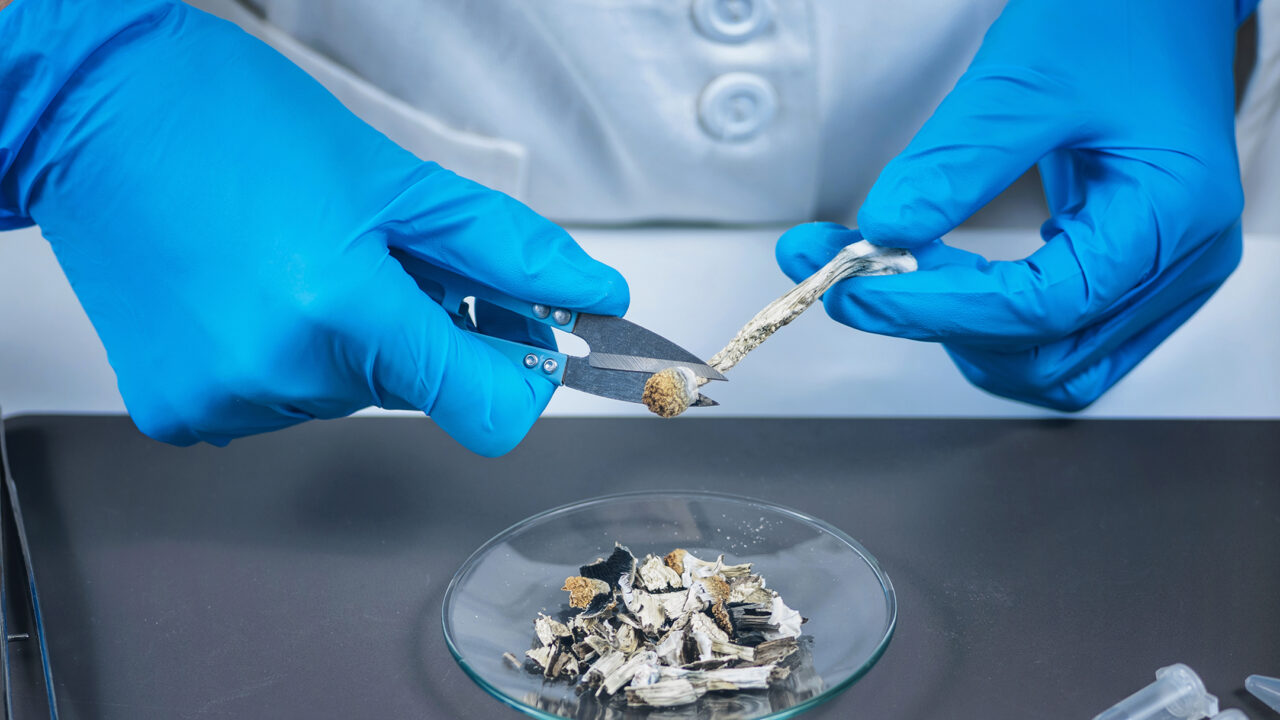
Medicinal mushrooms: evidence, applications, and considerations for clinical practice

BY Samuel Mathis, MD, Hasan Yasin, MD, and Victor Sierpina, MD   Mushrooms have been used for centuries in traditional medicine, and increasing scientific evidence backs their role in integrative medicine. When used appropriately, certain mushrooms offer significant health benefits, including immune system response rates, cancer-fighting properties, general well-being, improved sleep, and even psychiatric applications. Understanding both the possibilities and the limits of mushroom supplements helps us make recommendations for patients to use them safely...

Texas needs Congress to renew soon-to-expire premium credits

BY John Hawkins, President and CEO, THA   A fair number of times in this column’s history, you’ve seen me come back to Texas’ uninsured rate. It’s on our minds constantly at THA, because it’s the highest in the nation – more than 16%, at last accounting – and because good health coverage and good health care go hand in hand.   We’re always looking to get more Texans covered – and preserve anything that’s...

Global UNVEIL initiative launches to fast track lassa fever vaccine development

Scientists at the University of Texas Medical Branch’s Galveston National Laboratory have been awarded up to $6.4 million in funding to support an international research consortium to crack one of the toughest problems in infectious disease science: determining which immune responses protect people against Lassa fever.   This funding was awarded as part of a joint funding call by the Coalition for Epidemic Preparedness Innovations (CEPI) and Wellcome, with CEPI providing the funding to UNVEIL, which...

Novel drug confirms NSD2 protein as therapeutic target in lung and pancreatic cancers

Studies have shown that the NSD2 protein fuels cancer growth, particularly in difficult-to-treat cancers with KRAS mutations, suggesting it has potential as a therapeutic target. A new multi-institutional study led by Pawel Mazur, Ph.D., confirmed that NSD2 can be targeted with a new drug. Blocking NSD2 effectively reprogrammed the DNA structure, which reversed and prevented new cancer growth in preclinical models of KRAS-mutant lung and pancreatic cancers. The NSD2 inhibitor alone improved survival and, when combined with the KRAS inhibitor sotorasib, resulted...

Targeting brain-liver pathway with electronic wearables could prevent cancer-associated weight and muscle loss

Many patients with cancer develop a serious and currently incurable condition called cachexia, which is characterized by rapid weight and muscle loss and is responsible for nearly one-third of cancer-related deaths. Cachexia is driven in part by inflammation affecting the parasympathetic nervous system and liver function. Since the vagus nerve regulates the parasympathetic nervous system, Xiling Shen, Ph.D., and colleagues examined its role in cancer-associated cachexia. Preclinical models and patient blood samples showed that cancer progression...

Lorazepam significantly reduces agitation in patients with advanced cancer and delirium

Many patients with advanced cancer are significantly impacted by agitated delirium, but there are conflicting results on treating this condition with medication. To provide insights, David Hui, M.D., and colleagues examined the effects of different medications on treating delirium in 111 patients with advanced cancers. The researchers examined patient responses to haloperidol and lorazepam – both separately and combined – compared to a placebo, with patients receiving scheduled doses every four hours. Follow-up results show that lorazepam, alone or with...

Machine learning model improves treatment selection in non-small cell lung cancer

A significant challenge in developing treatment plans for patients with metastatic non-small cell lung cancer (NSCLC) is deciding whether to use immune checkpoint inhibitors alone or in combination with chemotherapy. Monotherapy is effective for many patients and is associated with fewer adverse effects. However, for patients who do not respond, the crucial time lost could lead to tumor progression. Unfortunately, there is a lack of reliable data to guide clinicians in this area. A team led by Jia...

MJH footer logo with red letters

Medical Journal – Houston is the leading source of healthcare business news. With extremely relevant content, late-breaking news and monthly exclusives from industry experts, MJH News has created a winning combination of must-read editorial that physicians and hospital executives eagerly anticipate month after month. MJH News is the resource that provides everything they need in one place, and it is a high honor that they rely upon Medical Journal – Houston to keep their practice or hospital on the cutting edge.

Archives