


Medical Journal March 2024 digital edition
March 27, 20241 min
Post Views: 1,544

BY Darron Gill, Advisory Partner, Healthcare, Houston AND Britni Barsness, Advisory Director, Financial Due Diligence Here we are again with the dawn of a new year, and questions regarding what 2024 will bring for dealmakers in healthcare and life sciences (HCLS) are front and center in the minds of many. At KPMG, we are happy to present our thoughts around these questions in our 2024 HCLS Investment Outlook (the Outlook). The Outlook is published annually...

BY Jordan T. Vogel and Michael R. Alexander, Brown & Fortunato, P.C. The use of modern technology to communicate with clients and to market products is increasingly common. On an almost weekly basis, I am on the receiving end of an autodialed or prerecorded text message or phone call encouraging me to purchase something. As these technologies become more common, so too does regulatory control and the risk of liability. As an example,...

BY Samuel Mathis, MD, Assistant Professor, UTMB In December of last year, the Lancet published an article about the effect nano-plastics can have on our health and organs. The primary location that nanoplastics have been found is in the ocean, though now research indicates that micro(nano)plastics (MnP) are “found in every environmental compartment on earth, within tissues and gastrointestinal tracts of thousands of species, including humans” (1). As someone who lives near the ocean,...

BY John Hawkins, CEO, THA It seems that every month, the threat becomes greater and greater for hospitals across the country: the possibility that bad actors can disrupt the hospital’s operations – or effectively bring them to a halt – without the offenders leaving their couch. As I write this, hospitals and hospital systems everywhere have spent recent weeks dealing with the implications of a major cyberattack in February on Change Healthcare, which...

A groundbreaking study by researchers at the University of Texas Medical Branch is shedding light on a promising development in the battle against highly fatal hemorrhagic diseases caused by orthoebolaviruses, including the notorious Ebola virus. The research highlights the strong protective efficacy demonstrated by Obeldesivir when administered orally, providing solutions to challenges faced in treating these viruses, particularly in resource-poor areas where intravenous therapies can pose significant logistical hurdles. “People are also much more likely...

A new addition at Quentin Mease Health Center, a Harris Health System specialty facility rededicated in 2023, promises to provide patients with more early cancer detection and prevention procedures. Through the Harris Health Endoscopy Center at Quentin Mease, staff will perform colonoscopies and other diagnostic exams for cancer. The 8,000-square-foot center features eight procedure suites, 11 pre-operative beds and 18 post-operative beds. It recently opened with two procedure suites with plans to increase operations...

The University of Texas MD Anderson Cancer Center announced it has acquired certain assets from Bellicum Pharmaceuticals, Inc. related to the CaspaCIDe® switch platform and the GoCAR® platform. The transaction also includes clinical-grade stocks of rimiducid, an agent used to trigger the switches. As a result of this acquisition, MD Anderson may incorporate these platforms into its own cell therapy programs. The institution also intends to make the technology widely available via non-exclusive licenses to other academic institutions and to biopharmaceutical...

Patients with relapsed or refractory (R/R) acute myeloid leukemia (AML) marked by high expression of CD123 have few effective treatment options. In a new multicenter Phase I/II trial, researchers led by Naval Daver, M.D., and Hagop Kantarjian, M.D., evaluated pivekimab sunirine, a novel CD123-targeting antibody-drug conjugate, in 91 patients with CD123+ R/R AML. This first-in-human dose-escalation and expansion study had a primary endpoint to determine the maximum tolerated dose and the recommended Phase II dose....
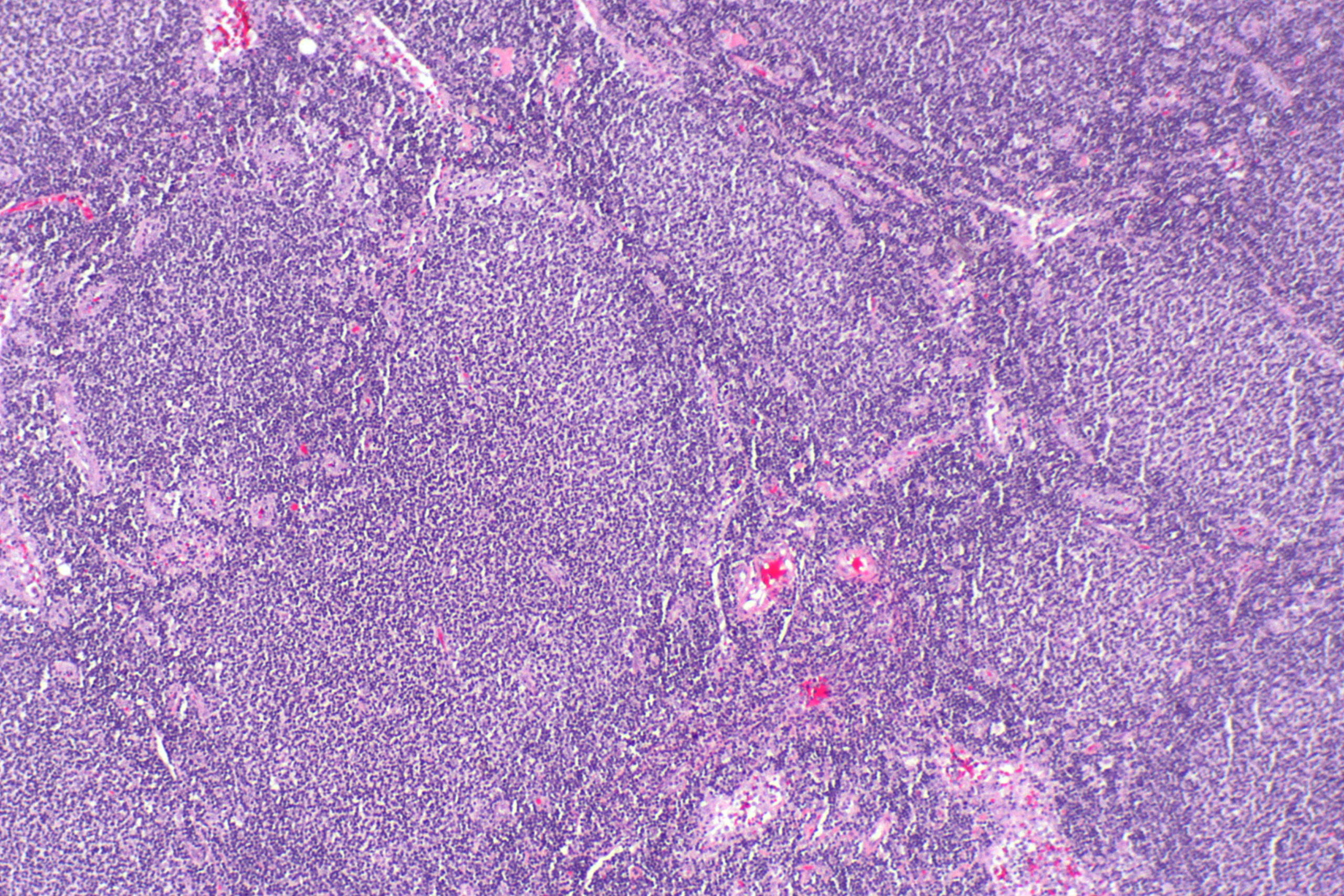
SMARCA4, which normally functions as a tumor suppressor, is one of the most commonly mutated genes in human cancers, including roughly 30% of germinal center (GC)-derived Burkitt lymphomas. Germinal centers are temporarily formed zones where B cells expand, but the role of SMARCA4 in promoting lymphoma development is unclear. To provide further insights, researchers led by Michael Green, Ph.D., examined the normal role of SMARCA4in GC B cells and how altering its function via mutation contributes to...