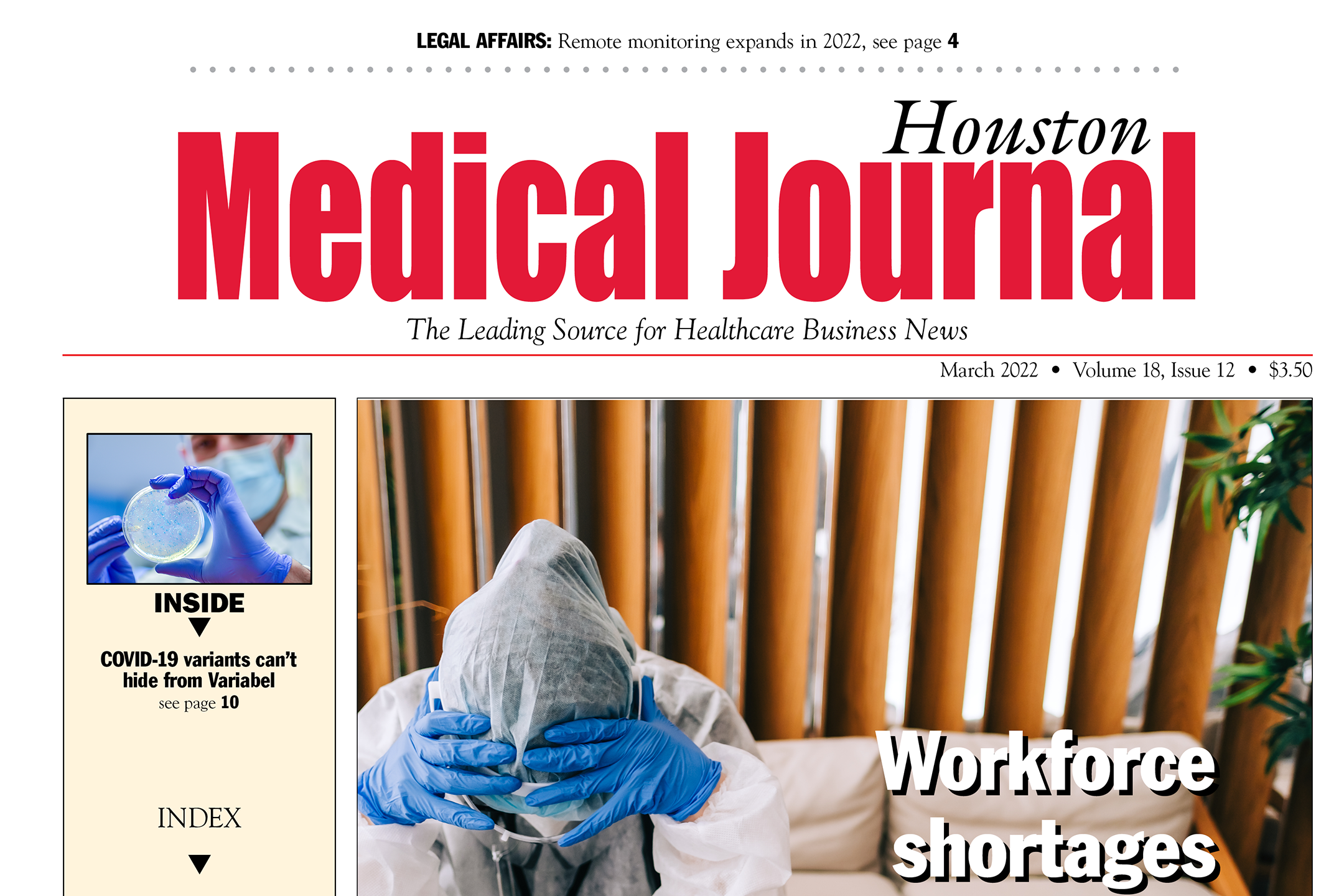


Workforce shortages threaten patient care

By John Hawkins, President/CEO, Texas Hospital Association Hospitals have grappled with health care workforce shortages long before the pandemic, but two years of providing COVID-19 care have strained provider resources and staff like never before. Health care workers serving on the frontlines of one COVID-19 variant surge after the next are profoundly burned out and exiting hospital employment in record numbers. Some are leaving the field altogether, while others are trading full-time work for more...


Honor caregivers by identifying and addressing workplace hazards

By Nick Hulse, Associate, Fisher Phillips and Kevin Troutman, Partner, Fisher Phillips In a recent news release, the Department of Labor (“DOL”) urged healthcare facilities to employ effective safety and health programs to protect those who protect us.  According to the DOL’s release, U.S. healthcare workers experienced a 249 percent increase in injury and illness rates in 2020.  Identifying the safety risks that healthcare workers are routinely exposed to and addressing them is crucial to...

Remote monitoring expands in 2022

By Phuong D. Nguyen and Beth Anne Jackson, Brown & Fortunato, P.C. Hot on the heels of approving new CPT codes for remote physiologic monitoring (RPM), the Centers for Medicare & Medicaid Services (CMS) approved new CPT Codes for remote therapeutic monitoring (RTM), effective January 1, 2022. The new RTM codes are related to monitoring respiratory system status, musculoskeletal system status, therapy adherence, therapy response (CPT codes 98976 and 98977). Similar to RPM codes, RTM...

Healthcare providers: A break in the clouds

By Dion Sheidy, Partner, Healthcare Industry Leader, KPMG The COVID-19 outbreak has had a profound impact on healthcare. Across the U.S., hospitals have been converted to COVID-19 treatment centers, and elective procedures have been put on hold by government mandate. Although CARES Act funds will help health systems weather the storm to some extent, there will ultimately be a shortfall. This underscores the urgency to find new sources of revenue. As health systems explore new...

Life beyond cancer: Survivorship

By Sagar Kamprath, MD, Assistant Professor of Family Medicine, University of Texas Medical Branch In a world with so many stressors and decreasing resources, we are left often wondering what to do when faced with further seemingly insurmountable news.  For some patients and family members, that news comes as one word: cancer.  Advances in the field of medicine allow our patients to survive much longer with targeted treatment options including immunotherapy, biologic treatments, chemotherapy, radiation,...

Study defines stem cell groups that drive myelodysplastic syndromes, finds potential targeted therapy option

Researchers from The University of Texas MD Anderson Cancer Center discovered that treatment resistance in patients with myelodysplastic syndromes (MDS) is caused by two distinct classes of stem cells and identified possible therapeutic approaches that target these cells. Their findings could have significant benefits for patients with disease progression. This research, which spans preclinical and clinical studies, represents the largest analysis to date of MDS patient samples. If further validated in larger clinical trials, the data...

COVID-19 variants can’t hide from Variabel

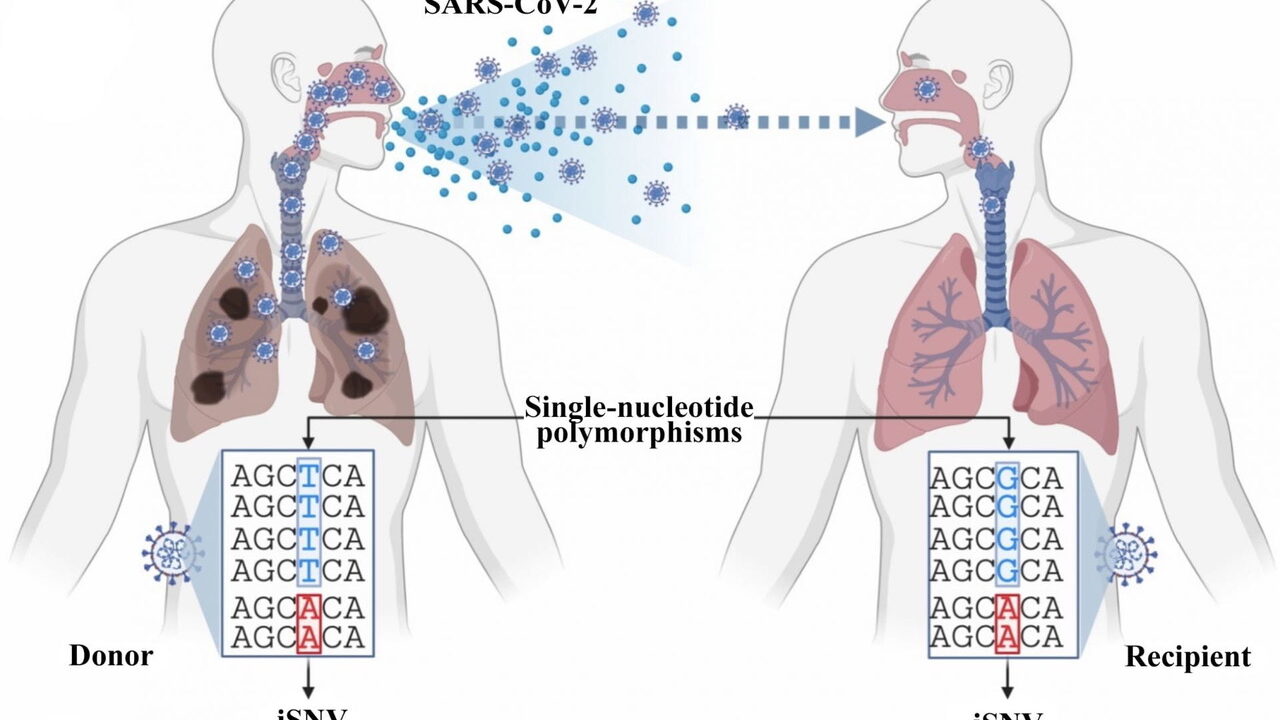
Details about variants hiding in the deluge of genetic SARS-CoV-2 sequences would be good to know, if only researchers a new program developed by Rice University’s George R. Brown School of Engineering will make it possible, at least for “intrahost variants,” those that appear in genome data from the same COVID-19-positive person. A Rice team led by computer scientist Todd Treangen and graduate student Yunxi Liu has developed Variabel, which accurately identifies “low-frequency variants” of the virus that causes COVID-19....

Targeting B7-H3 is a potential immunotherapy approach for high-risk AML

Acute myeloid leukemia (AML) is the most common leukemia in adults and, despite advances in targeted therapies, is associated with poor prognoses. Immunotherapy has shown promise, especially in combination with chemotherapy. A research team led by V. Lokesh Battula, Ph.D., demonstrated that the immune checkpoint protein B7-H3 may serve as a potential immunotherapy target in patients with AML. The team found elevated expression of B7-H3 to be associated with poor treatment outcomes in patients with AML. In preclinical studies,...

MJH footer logo with red letters

Medical Journal – Houston is the leading source of healthcare business news. With extremely relevant content, late-breaking news and monthly exclusives from industry experts, MJH News has created a winning combination of must-read editorial that physicians and hospital executives eagerly anticipate month after month. MJH News is the resource that provides everything they need in one place, and it is a high honor that they rely upon Medical Journal – Houston to keep their practice or hospital on the cutting edge.

Archives